- November 12, 2025
- 245 Views
- 6 Likes
- RENEWABLE ENERGY
Renewable Energy as a Solution to Nigeria’s Carbon Emissions from Oil & Gas Flaring
Burning Problem, in Plain Sight
Every night across the Niger Delta, flames rise from metal stacks—bright, roaring pillars of wasted energy. This is gas flaring, one of Nigeria’s oldest and most persistent environmental challenges. For decades, the oil and gas industry has burned off natural gas during crude oil extraction, releasing massive amounts of carbon dioxide, methane, soot, and toxic pollutants into the atmosphere.
Nigeria consistently ranks among the top gas-flaring nations globally, losing billions of cubic feet of gas yearly—gas that could power homes, industries, and entire communities.
But a deeper truth is emerging:
The solution to flaring isn’t only better regulation… It’s renewable energy.
Why Renewable Energy Is at the Heart of the Solution
1. Solar and Wind Can Replace the “Need” to Flare
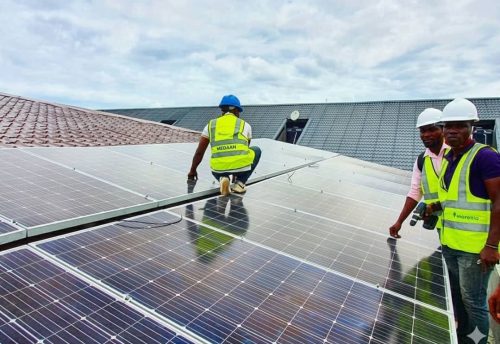
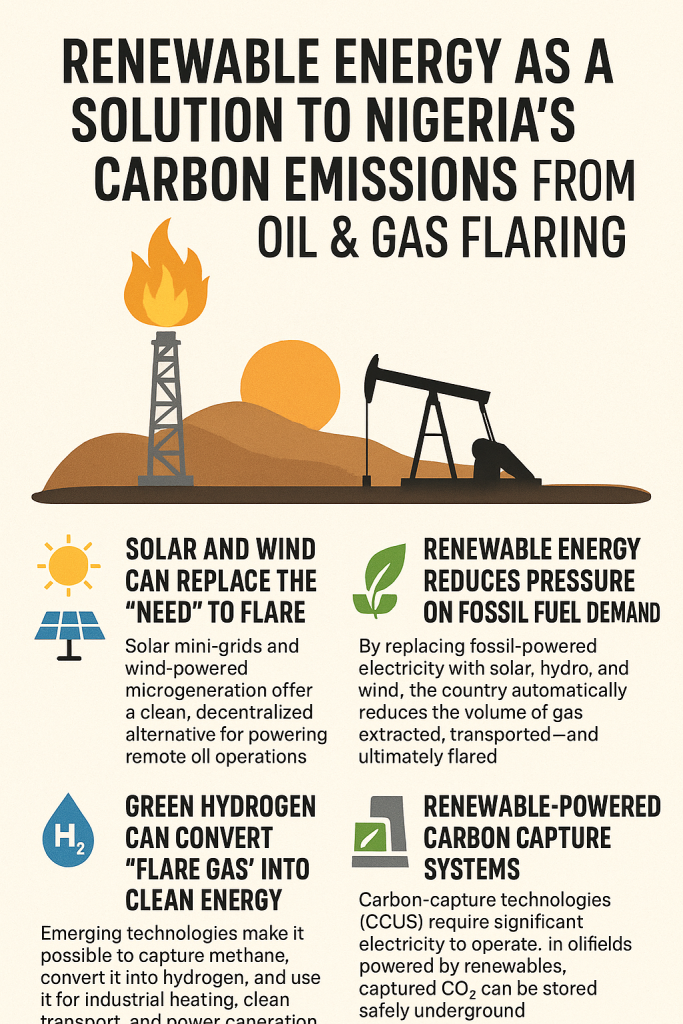
Oil companies often flare gas because the infrastructure to process and transport it is expensive. But renewable energy systems—especially solar mini-grids and wind-powered microgeneration—offer a clean, decentralized alternative for powering remote oil operations.
Instead of burning gas to run turbines, pumps, and machines, companies can electrify operations through renewables.
Less fuel burned = fewer emissions.
2. Renewable Energy Reduces Pressure on Fossil Fuel Demand
Nigeria’s national grid still depends heavily on natural gas. By replacing fossil-powered electricity with solar, hydro, and wind, the country automatically reduces the volume of gas extracted, transported—and ultimately flared.
Every megawatt of clean energy added to the grid is a step away from carbon-heavy dependence.
3. Green Hydrogen Can Convert “Flare Gas” into Clean Energy
Emerging technologies make it possible to capture methane, convert it into hydrogen, and use it for:
industrial heating
clean transport
power generation
Rather than burning gas into the sky, Nigeria can convert it into an exportable energy product.
4. Renewable-Powered Carbon Capture Systems
Carbon-capture technologies (CCUS) require significant electricity to operate. In oilfields powered by renewables, captured CO₂ can be stored safely underground—cutting emissions without adding new ones from fossil-fuel electricity.
5. Clean Energy Powers Communities Near Oil Fields
Communities in the Niger Delta have endured decades of environmental injustice:
polluted air
acid rain
reduced crop yield
health complications
Solar mini-grids and clean-energy infrastructure offer rural communities reliable, affordable, and non-polluting power, protecting public health and creating social equity.
The Economic Case: Why This Transition Makes Sense
Nigeria loses over $2.5 billion worth of gas to flaring annually.
That is enough natural gas to power thousands of homes and industries.
Instead of burning economic value, renewable energy creates:
jobs in solar installation and maintenance
local energy manufacturing opportunities
more stable electricity supply for SMEs and agriculture
investment opportunities through carbon credits
The global energy market is moving toward net zero, and Nigeria risks being left behind if it doesn’t pivot now.
What Nigeria Must Do to Make It Happen
1. Enforce Zero-Flaring Policies with Real Penalties
Existing laws must be backed with strict enforcement and transparent monitoring using AI and remote sensing.
2. Incentivize Renewable Energy in Oil-Producing Regions
Tax incentives for oil companies that integrate solar, wind, and hybrid solutions.
3. Expand Solar Mini-Grids in the Niger Delta
Power communities and reduce reliance on fossil-fueled generators.
4. Support Local Research in Flare Gas Conversion
Universities and energy-tech startups should be funded to develop methane-to-hydrogen innovations.
5. Build Public–Private Partnerships for Clean Energy Investment
Government, energy developers, and international climate financiers must collaborate to scale solutions.
A Path to a Cleaner, Fairer Future
Nigeria’s flaring problem is not merely an environmental burden—it is a lost opportunity. With renewable energy, Nigeria can:
cut carbon emissions drastically
turn wasted energy into economic advantage
protect vulnerable communities
position itself as a clean-energy leader in Africa
The flames of gas flaring have burned for decades. It’s time for Nigeria to replace them with the light of a renewable future.