- November 14, 2025
- 275 Views
- 7 Likes
- RENEWABLE ENERGY
Renewable Energy in Nigerian Manufacturing: Pathway to Lower Costs and Green Growth
Powering Factories, Powering the Future
Manufacturing is the backbone of any strong economy—but in Nigeria, it is also one of the sectors most crippled by unreliable electricity and skyrocketing energy costs. Many factories spend 30–40% of total operating expenses on diesel alone, limiting competitiveness and production output.
But a major shift is emerging: renewable energy is becoming the lifeline Nigerian manufacturers need to reduce costs, stabilize operations, and meet global sustainability standards.
Why Manufacturers Are Turning to Renewables
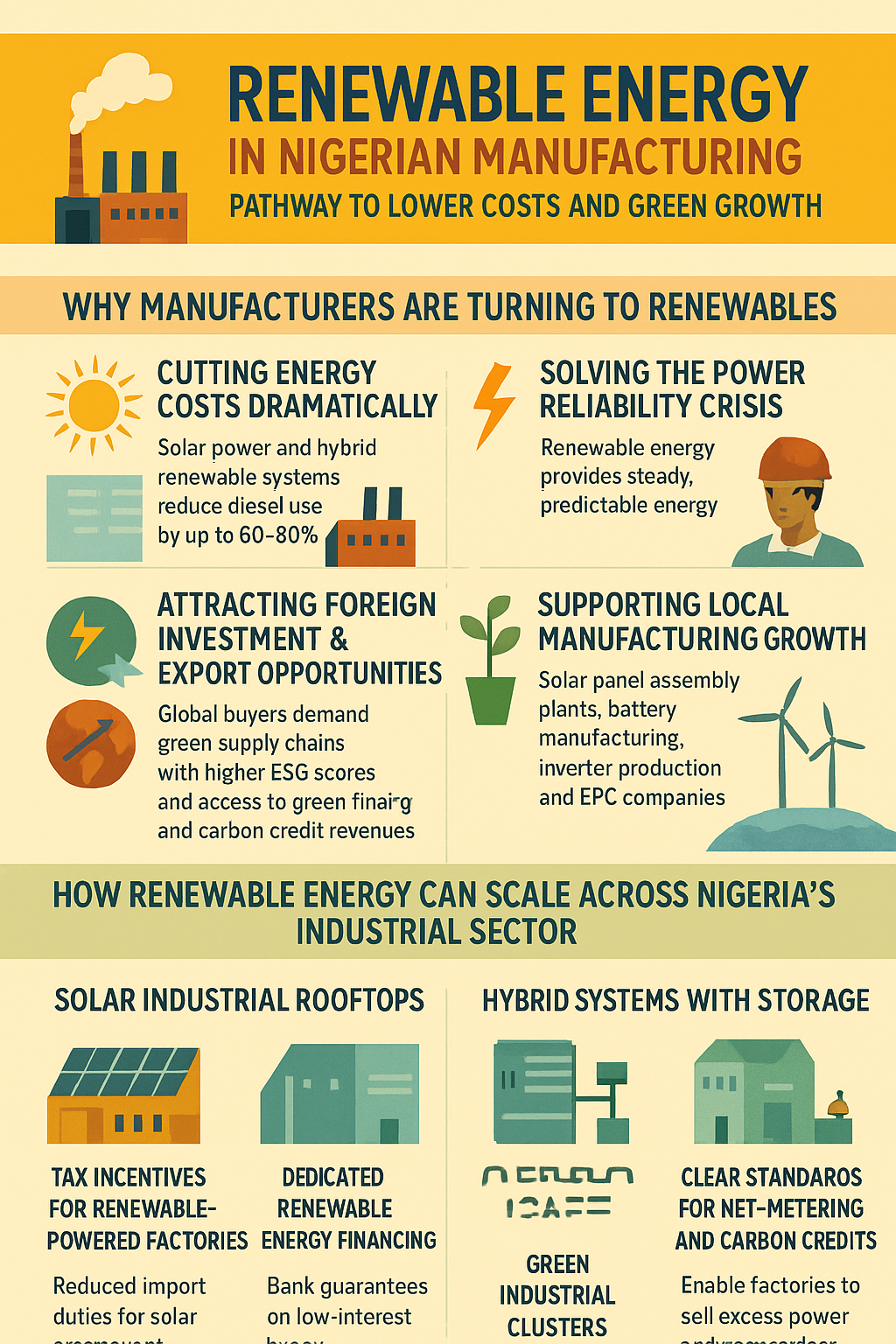
1. Cutting Energy Costs Dramatically
Solar power and hybrid renewable systems slash diesel use by up to 60–80%, reducing operating costs for:
textile factories
steel and aluminum processors
food and beverage producers
pharmaceutical plants
With solar now cheaper than diesel and grid electricity, renewables are the most cost-effective energy option for manufacturers.
2. Solving the Power Reliability Crisis
Unstable grid power disrupts production lines, damages equipment, and increases waste.
Renewables—paired with battery storage—provide steady, predictable energy, keeping factories running smoothly.
This means:
fewer shutdowns
higher product quality
reduced maintenance costs
3. Attracting Foreign Investment & Export Opportunities
Global buyers increasingly demand green supply chains. Manufacturers with renewable-powered operations gain:
Better access to EU and US markets
Higher ESG (Environmental, Social & Governance) scores
Access to green financing and carbon credit revenues
Renewable energy is no longer just a cost-saver; it is a competitive advantage.
4. Supporting Local Manufacturing Growth
A strong renewable sector also boosts local manufacturing capabilities:
solar panel assembly plants
battery manufacturing
inverter and charge-controller production
EPC (Engineering, Procurement & Construction) companies
This creates jobs and stimulates industrial diversification.
How Renewable Energy Can Scale Across Nigeria’s Industrial Sector
Solar Industrial Rooftops
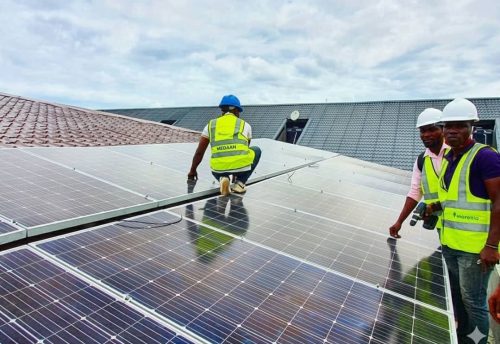
Large factory roofs offer thousands of square meters for solar installations that can generate significant electricity.
Hybrid Systems with Storage
Combining solar, battery storage, and minimal diesel guarantees 24/7 energy availability.
Wind Power for Coastal Industries
Factories in Lagos, Warri, and Port Harcourt can harness wind energy to complement solar power.
Bioenergy for Agro-Manufacturers
Rice mills, cassava processors, breweries, and FMCG producers can convert waste into biogas or biomass energy.
Policy Support Needed for Green Manufacturing
1. Tax incentives for renewable-powered factories
Reduced import duties for solar components and industrial batteries.
2. Dedicated renewable energy financing for manufacturers
Bank guarantees and low-interest loans through BOI, AfDB, and commercial partners.
3. Green industrial clusters
Special economic zones powered primarily by renewables.
4. Clear standards for net-metering and carbon credits
Enabling factories to sell excess power and earn carbon revenue.
A New Industrial Era for Nigeria
To industrialize sustainably, Nigeria must embrace energy solutions that are:
cheaper
cleaner
reliable
globally competitive
Renewable energy offers all four.
By integrating solar, wind, biomass, and hybrid systems into manufacturing, Nigeria can unlock lower costs, energy security, high-quality exports, and green economic growth.
The future of Nigerian manufacturing isn’t powered by diesel—it’s powered by the sun.