- September 4, 2025
- 307 Views
- 1 Likes
- RENEWABLE ENERGY
Lighting Up Nigeria: Renewable Energy as the Cure for Power Deficits.
Lighting Up Nigeria: Renewable Energy as the Cure for Power Deficits.
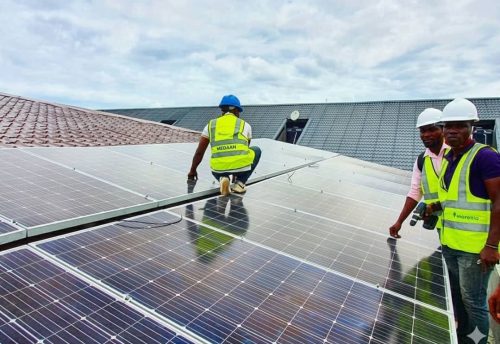
For years, the phrase “Nigeria has great potential” has been repeated like a broken record. Yet, one barrier has remained constant: electricity supply. Blackouts have stifled industries, families rely on noisy, polluting generators, and the national grid barely keeps pace with growing demand. But now, a quiet revolution is emerging — not from oil rigs or gas plants, but from solar panels powering mini-grids across the country.
Solar Mini-Grids: Power Where It Matters Most
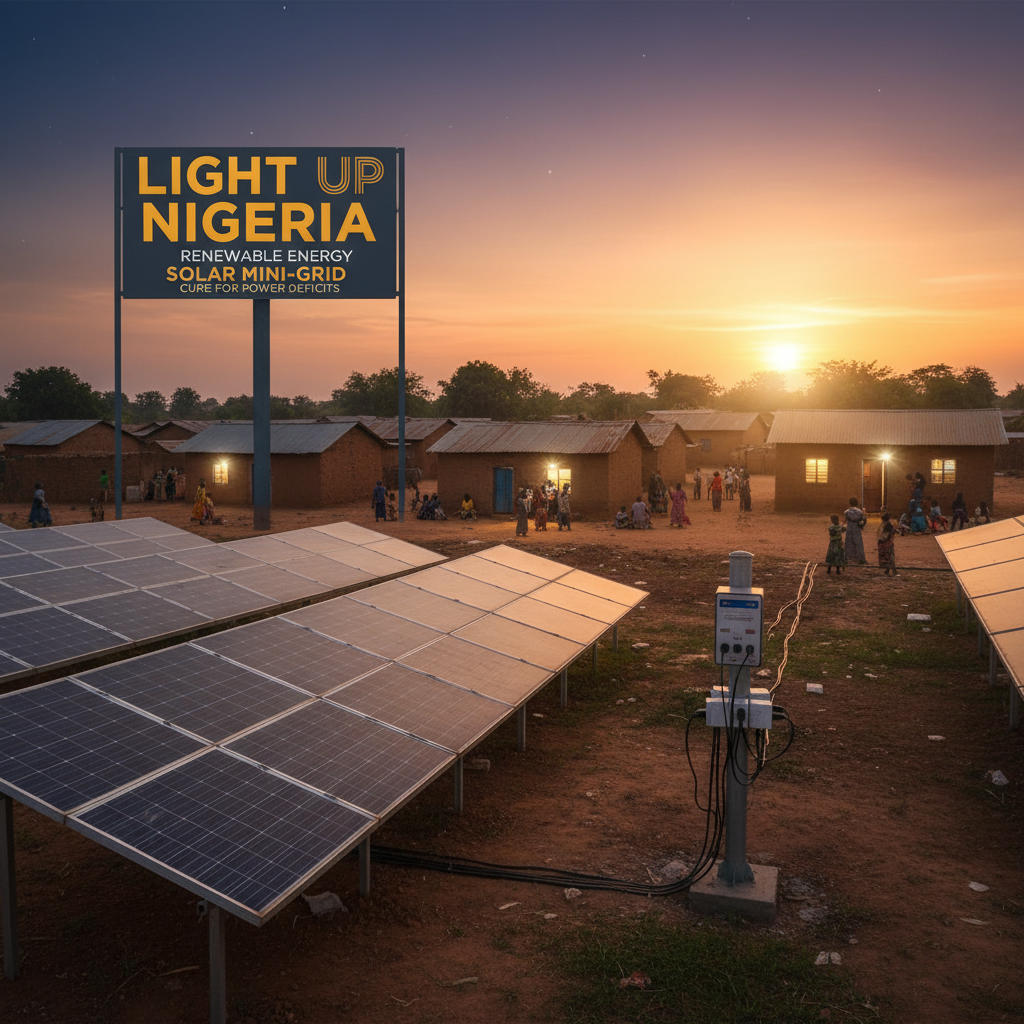
Unlike the national grid, which struggles to extend its reach, solar mini-grids bring power directly to communities. These stand-alone systems combine solar panels, batteries, and smart distribution networks to provide reliable electricity, day and night. For the 80 million Nigerians still living without access to power, mini-grids are more than technology — they are a lifeline.
Changing Lives, One Community at a Time
Across Nigeria, success stories are multiplying:
● Farmers use solar-powered irrigation and cold storage, preventing food spoilage and increasing income.
● Clinics now refrigerate vaccines and run diagnostic machines, saving lives in remote villages.
● Schools light up classrooms, power computers, and open the door to digital learning.
● Entrepreneurs — welders, tailors, shop owners — no longer lose business to blackouts or the high cost of diesel.
Each solar mini-grid does more than generate electricity; it creates opportunities, drives productivity, and builds hope.
The Billion-Dollar Opportunity
The Nigerian government, in partnership with the World Bank, African Development Bank, and private investors, is betting big on mini-grids. The Nigeria Electrification Project (NEP) is a bold
step to deploy thousands of systems nationwide. Analysts predict that building 10,000 solar mini-grids by 2030 could inject billions of dollars into the economy, while creating jobs in installation, engineering, and local manufacturing.
Beyond Oil: Nigeria’s Green Energy Future
The sun is Nigeria’s most abundant resource — shining bright for more than 300 days a year. Harnessing it through solar mini-grids isn’t just about fixing today’s power deficit; it’s about reimagining the nation’s energy future. With renewables, Nigeria can cut its reliance on fossil fuels, reduce carbon emissions, and achieve true energy security.
Conclusion: Powering Prosperity
Nigeria’s development story has long been tied to oil. But the future may be written in sunlight. As solar mini-grids light up villages, towns, and industries, they do more than provide electricity — they power prosperity, inclusion, and resilience.
The cure for Nigeria’s power deficit is already here. It’s clean, it’s renewable, and it’s shining down on us every day.