- December 8, 2025
- 338 Views
- 7 Likes
- RENEWABLE ENERGY
Nigeria and the Paris Agreement: Meeting Climate Commitments through Renewables
A Global Promise, a National Responsibility
In 2015, Nigeria joined nearly 200 countries in signing the Paris Agreement, a historic global pact aimed at limiting climate change and reducing greenhouse gas emissions. By signing on, Nigeria committed to cutting emissions while pursuing sustainable economic growth.
But nearly a decade later, a critical question remains:
Is Nigeria on track to meet its climate commitments—and can renewable energy make the difference?
What Nigeria Promised Under the Paris Agreement
Nigeria’s climate pledge, known as its Nationally Determined Contribution (NDC), outlines two major targets by 2030:
20% emission reduction using Nigeria’s own resources
45% emission reduction with international support
The plan focuses on key sectors:
⚡ electricity and energy
🚜 agriculture
🏭 industry
🚗 transportation
🌳 land use and forestry
At the heart of this strategy lies one powerful solution: renewable energy.
Why Energy Is the Climate Battleground
Nigeria’s power sector is one of the largest contributors to national emissions. Heavy reliance on:
diesel generators
gas-fired power plants
inefficient grid systems
has created a carbon-intensive energy economy. With over 85 million Nigerians lacking reliable electricity, millions depend on fossil-fuel generators—often dirtier than large power plants.
Renewable energy offers a path to both emissions reduction and energy access.
Renewables as Nigeria’s Climate Solution
🌞 Solar Power: The Fastest Win
Nigeria lies within the global sunbelt, receiving abundant sunlight year-round.
Solar can deliver immediate climate benefits by:
replacing diesel generators
powering mini-grids for rural communities
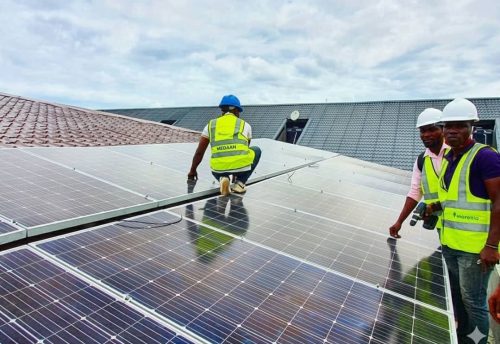
supporting rooftops in homes, schools, and factories
Solar alone could cut millions of tons of CO₂ annually.
💨 Wind & 🌊 Small Hydro: Untapped Potential
While less developed than solar, wind corridors and small hydropower sites across Nigeria offer low-carbon electricity options—especially for regional grids and industrial clusters.
🔥 Bioenergy & Waste-to-Energy
Agricultural waste, municipal waste, and organic residues can be converted into clean energy—reducing methane emissions while creating power and jobs.
Mini-Grids: Climate Action Meets Energy Access
Solar mini-grids are emerging as one of Nigeria’s most effective climate tools. They:
replace diesel generators
power rural businesses
improve healthcare and education access
cut carbon emissions at the community level
Mini-grids prove that climate action can also drive development and inclusion.
The Challenges Holding Nigeria Back
Despite strong potential, obstacles remain:
Financing gaps for large-scale renewable projects
Policy inconsistencies and slow implementation
Grid infrastructure limitations
Limited local manufacturing capacity
Without urgent action, Nigeria risks falling short of its Paris targets.
What Nigeria Must Do to Stay on Track
1. Scale Renewable Energy Investments
Public–private partnerships and climate finance must be expanded.
2. Strengthen Climate Policy Enforcement
Clear regulations, incentives, and accountability mechanisms are essential.
3. Phase Down Diesel and Fossil Subsidies
Redirect subsidies toward clean energy adoption.
4. Expand Carbon Markets & Green Financing
Carbon credits can fund renewable projects and support emission reductions.
5. Build Local Capacity
Training engineers, technicians, and climate professionals is critical for long-term success.
Renewables: Nigeria’s Path to Climate Leadership
Meeting the Paris Agreement is not just about compliance—it’s about opportunity. Renewable energy can:
improve energy security
attract green investment
create jobs
reduce pollution
protect future generations
Nigeria has the natural resources, human capital, and market size to lead Africa’s clean energy transition.
Final Word
The Paris Agreement is a promise to the world—but more importantly, it is a promise to Nigerians. Renewable energy provides the clearest, fastest, and most inclusive path to meeting climate commitments while powering economic growth.
The tools are available.
The resources are abundant.
The moment to act is now.